
The Design Renaissance: Why the Human Touch Is the New Luxury
I met with longtime clients this week, snowbirds who head to Florida each winter and charge me and their contractor with completing a project while they're away. I first met them when they were working with a local Kitchen & Bath showroom on their kitchen.
My clients felt the showroom designer wasn't grasping their aesthetic, and became alarmed when the designer's selections didn't work with other rooms in their open-concept floor plan.
They brought me on board, and what started as a large luxury kitchen renovation has grown over the years. We've converted guest bedrooms into private en-suites by adding bathrooms, transformed a dark, dated, wood-paneled space into a sophisticated game room. And redecorated their primary suite and dining room. A few rooms in the house remain, and this winter's project will tackle one of them!
Since I've been working with them over several years, I mentioned that I now use AI to help generate renderings quicker; the husband looked at me and said, "Uh oh. I start sweating every time someone says they use AI."
I laughed. I get it. He's a retired businessman and ran several successful companies at once. He knows there are no REAL shortcuts. He knows nothing replaces hard work, ingenuity, and elbow grease. His success is a testament to that.
I've been integrating AI into my workflow where I can because, as a small design firm, my issue is capacity, not creativity. In matters of creativity, AI can only drive using the rearview mirror. It can only replicate what already exists. In science, it can process data, extrapolate patterns, and help communicate ideas faster, but in art...it cannot create. The soul of a well-designed home will never come from an algorithm. If anything, what I'm witnessing in my design projects right now proves it.
The Paradox
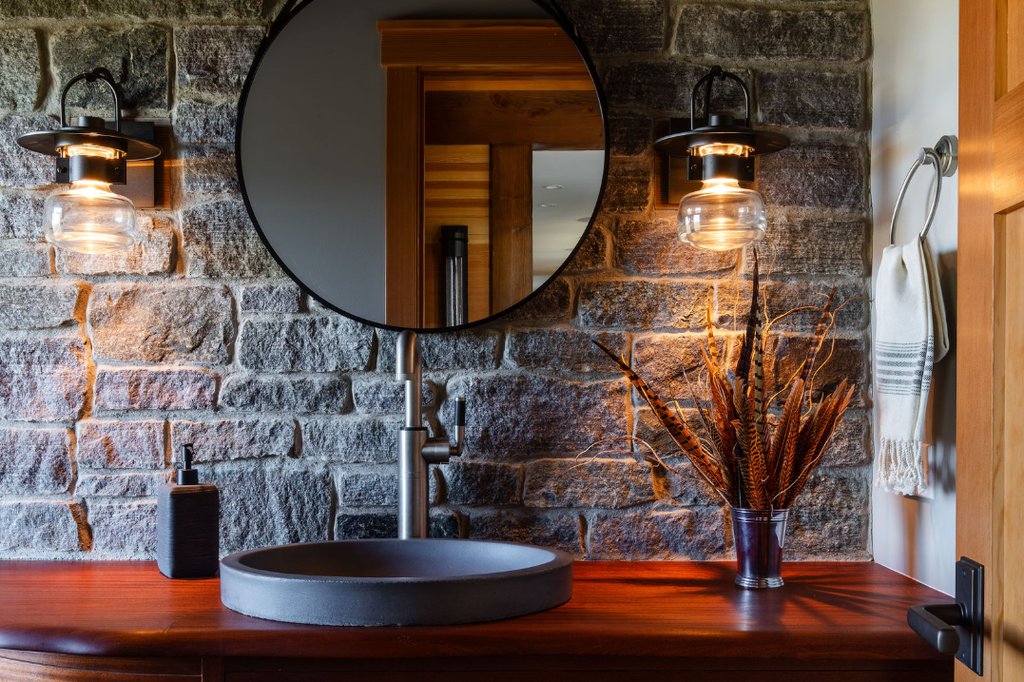
The more "perfect" our digital world becomes, the more we crave authenticity. When Pinterest is filled with flawless AI rooms, when every Instagram photo is polished and copy-able (is that a word? 🤔), the thing that signals real design is something unique and custom. The rooms that are unique to their owners. The rooms with art purchased from a local artist, a hand-carved bowl filled with pretty stones collected on hikes, a hair-on-hide chair that no algorithm would ever put in your feed. The things that cannot be produced using a reverse image search.
The Rooms My Clients Are Actually Asking For
People are spending more time at home than ever before. What began with the pandemic has quietly continued, and what my clients want from those spaces is shifting. Fewer are asking for open concept. I'm working on a lake house right now where the entire furniture plan is built around analog activities: looking out at the lake, games, puzzles, family gathering. A TV happens to be in the room, but it's almost an afterthought and certainly not a focal point.
Now with Samsung Frame TVs that display art when they're not in use, designers can return to the practice of drawing attention to focal points that say something because we no longer have to design around a television in spaces where the television is a big black hole mounted far too high above the fireplace.
As someone married to an introvert - English teacher + writer + voracious reader, I can tell you that a closed floor plan and a room lined with real books does something to the nervous system that no noisy, open concept ever could.
Luxury has always been about access to what others cannot afford. Do not get me started on the whole "luxe for less" trend. I digress...
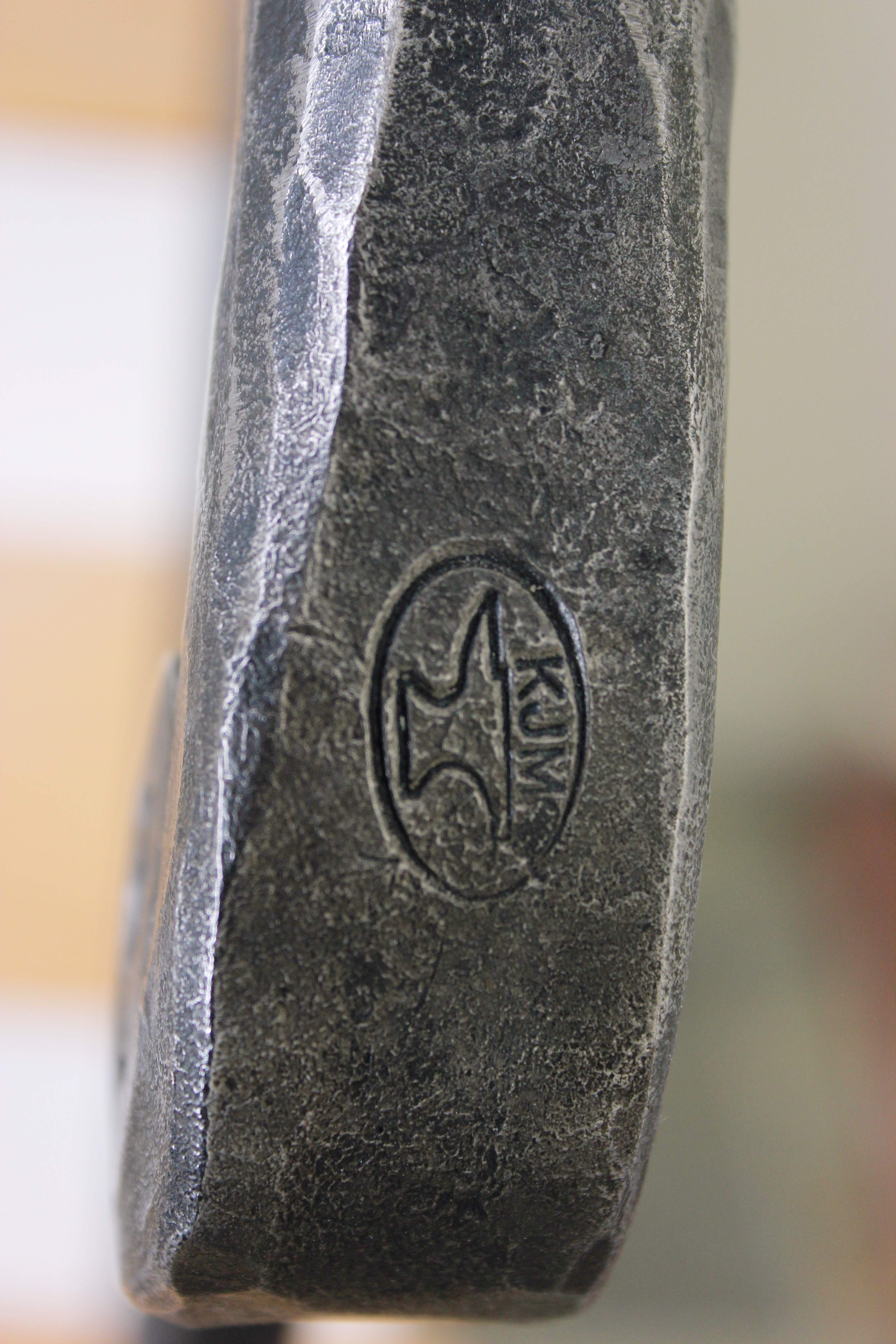
For a long time, 'luxury' meant perfection. That definition is shifting. Today's luxury is found in the wabi-sabi of the handmade. Pieces that don't come off a production line. Pieces that connect your home to our human-ness: a maker, a tradition, a moment in time. Hand-hewn floors in a Vermont mountain home carry the memory of the tree it came from and the hands that crafted the planks. Bespoke metalwork on a custom stair rail branded with the forge stamp. These stories live in your home whether other people notice them or not.
The Designer's Role in This Shift
This is where the distinction between access and understanding matters. I was interviewing some contractors recently and one bragged to me that he was able to buy Hubbardton Forge at a discount. In the words of Shania Twain, "That don't impress me much." Every designer has access to trade resources. What separates a great designer from a contractor with a login is knowing WHERE to use the lights and what scale, proportion, and style look best and being able to explain WHY.
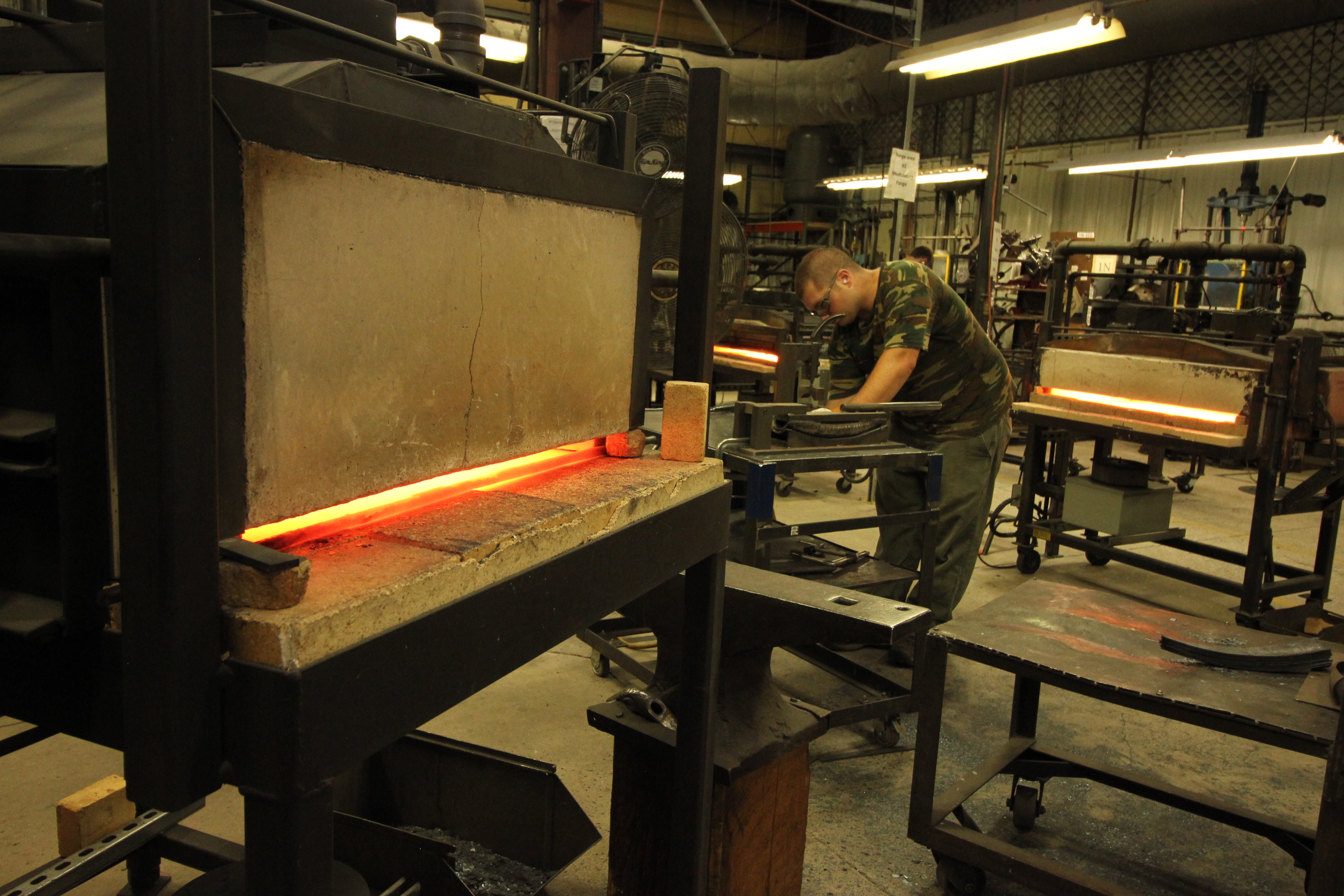
I had the privilege of touring Hubbardton Forge twice. Vermont's very own lighting manufacturer and one of the oldest and largest forges of its kind in North America. Both tours began not on the factory floor but with their designers. They showed us hand sketches of products literally on the drawing board...designs that began as ideas in a human brain, drawn by a human hand, before a single piece of software was opened. Creativity leads. Technology follows.
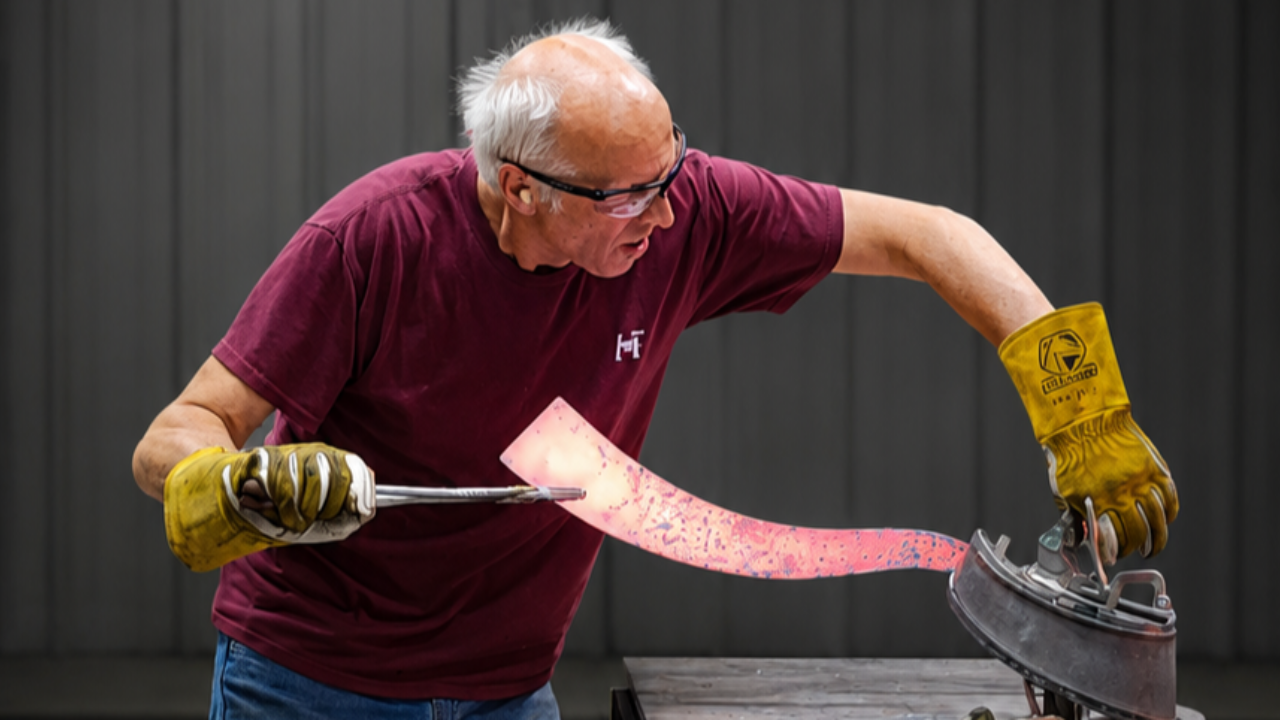
On the most recent tour, an artisan pulled a piece of iron from the forge. The metal was RED hot and glowing. He paused to briefly answer our questions as our group passed. By the time we finished speaking, the metal had cooled enough that he had to put it back in the forge to reheat before he could continue. It impressed on me how short the window to work is - or you run the risk of having to start over.
Then they asked for volunteers to help bend the curved arms of a chandelier. A volunteer pulled with everything they had and barely moved it. Then the craftsman stepped up and pulled it effortlessly, in a fast, fluid motion. THAT got a reaction from all of us!
What also struck me was their commitment to systems and documentation. They work on a lot of custom items, and of course everything is hand-forged, and they created extraordinarily tight protocols that govern every step, not to slow the work down but to make timelines consistent and keep people safe in an environment that is physically demanding, extremely hot, and wholly unforgiving of carelessness. It taught me that even handcraft requires discipline.
Which is why it was both unsurprising and infuriating when Hubbardton Forge recently reached out to their trade network with a buyer-beware notice. Counterfeiters, operating through unauthorized websites using stolen imagery, have been copying their designs and selling inferior products as the real thing. Hubbardton Forge built an entire product authenticity page to protect customers from fakes that carry no warranty and are sub-par knock-offs of their work.
Imitation is the sincerest form of flattery...except in manufacturing, where it makes you a counterfeiter. These thieves didn't invest in designers or give them time and space to create and dream. They aren't hand-forging anything. They're mass-producing in hours what takes weeks to handcraft, and calling it the same thing.
The Cost of Making Something...Properly
I observed something years ago when I first visited Europe that has never left me: Europeans value quality over quantity. They invest in staple pieces: a handbag, a trench coat, a kitchen built to last. They save consciously to buy the best. And research supports what they already know intuitively: when we are surrounded by high quality, we actually feel better. Quality ages gracefully. It doesn't need to be replaced because it develops a patina that contributes to its beauty.
Pierre-Alexis Dumas of Hermès was interviewed, and I think about what he said often:
"It's not expensive, it's costly. The cost is the actual price of making an object properly with the required level of attention so that you have an object of quality. Expensive is a product which is not delivering what it's supposed to deliver, but you've paid quite a large amount of money for it, and then it betrays you -- that's expensive."
The same is true of renovation. When done with skilled hands, thoughtful planning, and genuine artistry, the investment is worthy of both the time and the cost.
I've watched two of my cabinet makers, both trained in custom furniture making, apply those same skills to staircases, doors, and millwork throughout entire homes. The artisan's reach doesn't begin and end with a single piece of furniture. I love working with them because they elevate my designs through their expertise. This is the power of strategists and tacticians working together.
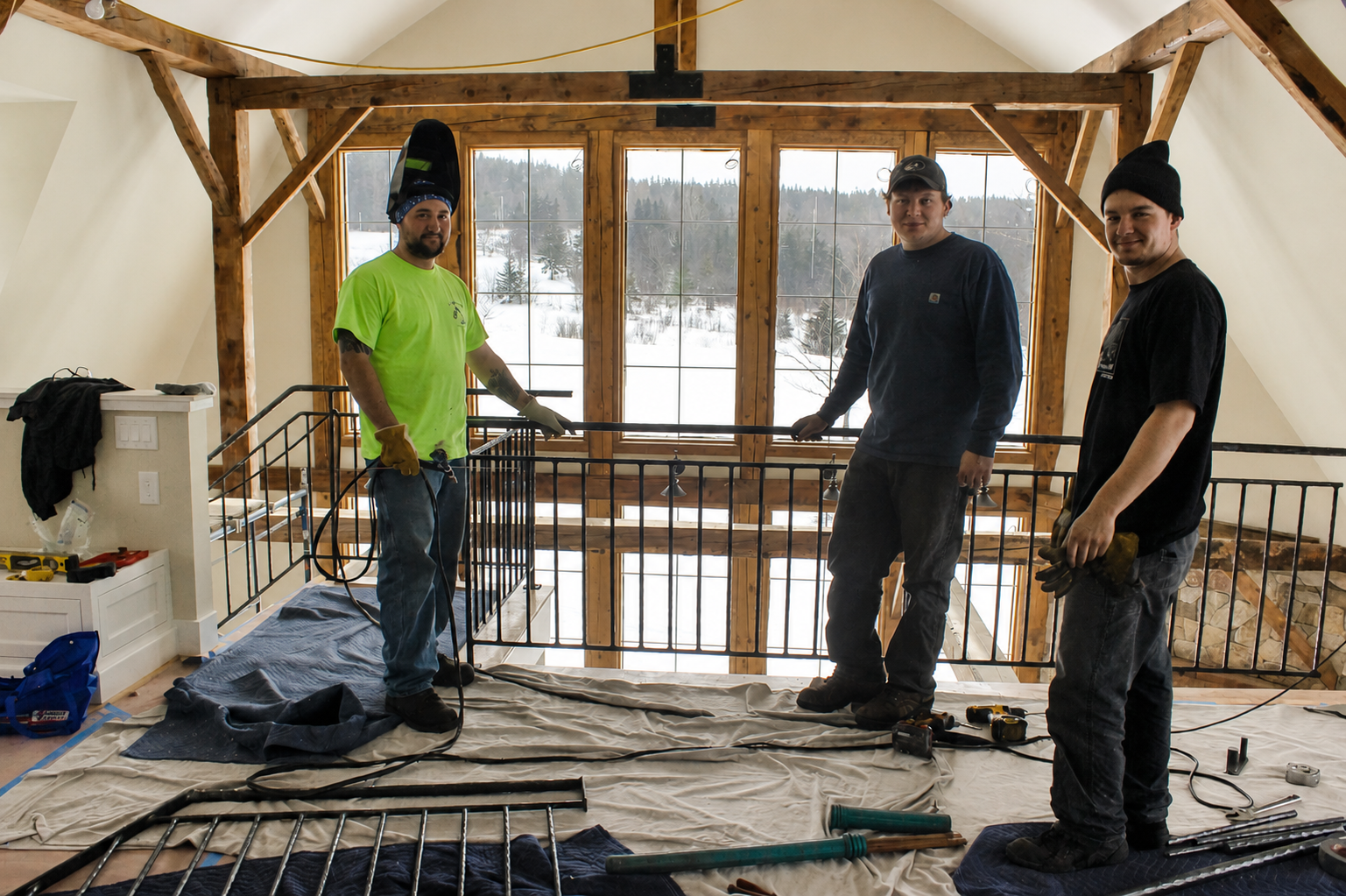
In a world accelerating toward the artificial, the handmade has become the ultimate expression of luxury. Not because it's slow, but because it's intentional. Not because it's imperfect, but because those imperfections are the proof of something human. Something real.
Your home deserves that.
Have a well-designed day,

Welcome!

I'm Ruxana - nice to meet you!
As a professional interior designer, I empower my clients to live their best lives through intentional and thoughtful interior design. I have a degree in Interior Design and over 24 years of professional experience. My travels around the world have also informed my design philosophy, allowing me to create warm, inviting homes. Homes where everyday events are celebrated...and where dogs are members of the family.